





 We provide data, analyses, and economic forecasts that contribute to the State’s economic development and long-term planning. READ collects, compiles, interprets and posts data and statistics on all aspects of Hawaii’s economy, with additional detailed information on Hawaii’s tourism (visitor), labor, and energy sectors, and its population and demographic characteristics. READ also creates research reports on the economy and emerging industries in the State. READ provides the statistical and economic foundation for the State’s HIGrowth Initiative.
For beginning users and casual researchers, start with Hawaii Facts & Figures, the Hawaii State Data Book, or visit our Hawaii Dashboards page to learn about current economic conditions and special topics of economic interest. READ also maintains the Hawaii State Data Center, the officially designated source of Census Data for the State. Publications on economic trends, statistics and insights into Hawaii’s economy are also available.
Advanced researchers may want to check first to see if State economists have already analyzed data and issued a report on your subject matter. You can also do-it-yourself and get custom “information at your fingertips” using our Economic Data Warehouse and Tourism Data Warehouse tools. A number of analytic tools are also available in the form of time series data, GIS mapping tools, and economic modeling tools. If you are interested in how Hawaii compares to other states, click here.
The Research and Economic Analysis Division is administered by Dr. Eugene Tian, Chief State Economist. Dr. Joseph Roos heads the Economic Research Branch and Dr. Y.S. Kim is the Branch Chief of the Statistics and Data Support Branch. Ms. Jennifer Chun is the Director of Tourism Research and Ms. Jeri Sato heads the Labor Research Branch.
For the Uniform Information Practice Act (UIPA) request, please contact: Tammy Lam, Division Secretary, at (808) 586-2466, or email at [email protected] or by mail to 250 S. Hotel Street, Honolulu, Hawaii 96813.










| March 28, 2024 | Monthly Economic Indicators – February 2024 |
| March 6, 2024 | Quarterly Statistical & Economic Report – 1st Quarter 2024 |
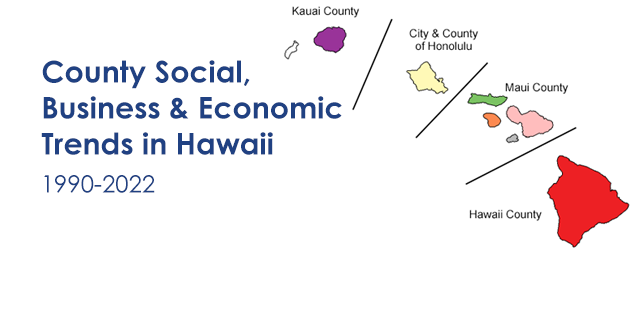
| January 16, 2024 | County Social, Business and Economic Trends in Hawaii |
| December 13, 2023 | The Economic Impact of International Students in Hawaii, Calendar Year 2022 |