









|
Swimmer's Itch
(schistosome dermatitis)
What is swimmer's itch?
Swimmer's itch is a rash that results when certain types of blood
flukes (parasitic worms), called shistosomes, penetrate the skin. The
infection is reported in many parts of the world where people swim in
lakes, including the Great Lakes region in North America, and in
certain coastal beaches in California and Hawaii.
How do you get swimmer's itch?
You get it by swimming or wading in waters contaminated with the
parasitic blood fluke. The larval stage of certain shistosomes of birds
and mammals penetrates human skin and causes intense itching. The risk
of being infected is greater when the water is calm and the temperature
is warm. Although anyone can get swimmer's itch, children are infected
more often than adults. Person-to-person spread does not occur.
What are the symptoms of swimmer's itch?
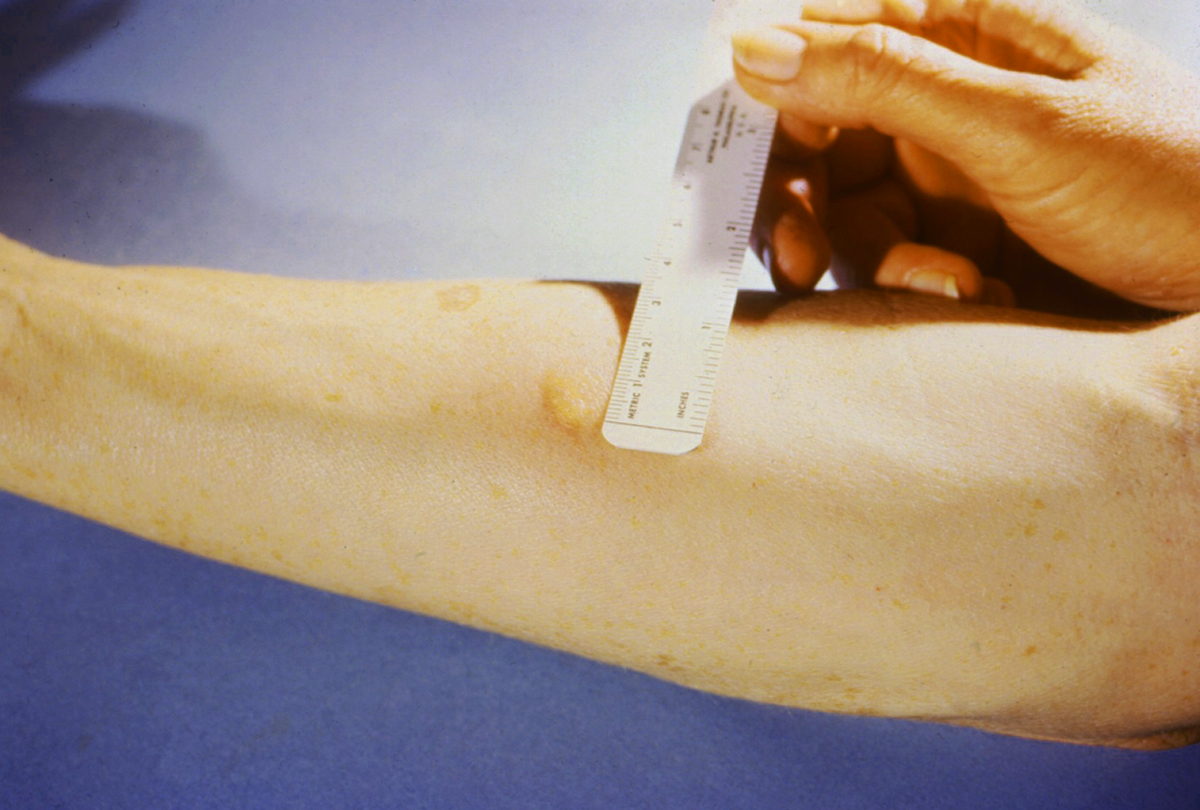
A tingling sensation can often be felt when the flukes penetrate
the skin. Mild to moderate itching occurs at the site of penetration
few hours after exposure. More intense itching follows in 5 to 14 days,
sometimes accompanied by a slightly bumpy rash. The symptoms are
intensified in individuals who have had previous exposure to blood
flukes.
When do symptoms start?
The first symptoms can begin within a few hours of exposure to the
blood fluke. Severe itching and a rash may follow 5 to 14 days after
exposure.
What is the treatment for swimmer's itch?
While most cases do not require treatment, some individuals may
get relief by applying skin lotions or creams to reduce the
itching.
How do you keep from getting it?
Avoid swimming in streams, ponds, lakes, or coastal areas known to
be infested with shistosomes.
Prevent exposure to shistosome-infested waters by using protective
gear such as rubber wading boots.
If exposed to fluke-infested water, promptly and vigorously
towel-dry any skin surface that was exposed to the contaminated
water.
Apply isopropyl alcohol (rubbing alcohol) immediately after exposure
to fluke-infested water in order to help prevent attachment of flukes
to the skin surface.
|